You want to be a better athlete. Here is what you are missing.
Hockey demands more than looking strong in the gym. You have to produce force fast, own your position and deliver that power while skating, handling the puck and reading the game. Power decides the race to a loose puck and the battle along the boards.
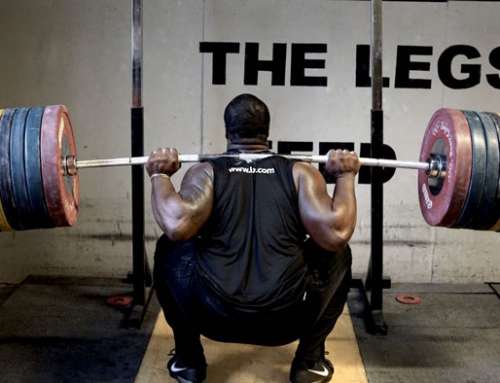
Olympic weightlifting is, bar none, the best way to build it. Once an athlete gets through the technical learning curve, nothing beats the snatch, the clean and jerk and their variations for force development. That is why we use them with our hockey players. Not as an extra. As the standard.
Think about an artist. Better brushes and paint give the artist better tools. Practice teaches the artist what to create. The Olympic lifts are the best tools there are for building power. Your time on the ice teaches you how to use it. You need both. Skip the first and you are painting with a worn-out brush.
Mark Friedman came to us at 16 with lower-back issues. He was undersized for a defenceman, weak and slow after years of following his team program. In one off-season we remapped his body and started reversing those habits. He skated faster, shot harder and became harder to play against. He kept coming back, put in more off-seasons of work, and went on to be drafted and reach the NHL.
That was not one exercise doing the job. That was a player who committed to the work, with the right coaching and the right tools. Years of following a team program had not given him what he needed. We did.
Nothing builds power like the Olympic lifts
The snatch and the clean and jerk force you to coordinate the whole body and move a load fast. You produce force, guide the bar and lock into a controlled receiving position. The explosive drive through the legs and hips is exactly the quality a hockey player needs. Build it in the gym. Express it in your stride.
Cody Morgan described getting stronger, faster and feeling better on the ice after his off-seasons at LPS while he was playing for the Windsor Spitfires. That is the result we train for: what the player can do on the ice, not just what is on the bar.
Do not try to imitate skating with a barbell. A lift does not need to look like a stride to belong in a hockey player’s preparation. We build the quality in the gym. The athlete expresses it in the game.
Our hockey dryland training in North York includes strength work, jumps, acceleration, recovery and hockey practice. Every piece has a job. When the job is power, the Olympic lifts lead.
There are levels to it
Plenty of programs include cleans. That does not mean they are developing power. Doing cleans is not the same as doing them right.
Technique, loading, progression and coaching separate real force development from going through the motions. A sloppy pull with the wrong load does not build the quality you need. A clean that is taught, loaded and progressed properly builds an athlete. Having the lift on paper does not mean your program delivers what the lift can deliver.
Former NHL strength coach Sean Skahan’s published Total Hockey Training sample puts hang cleans alongside jumps, front squats, chin-ups and short sprints. The clean has a specific job inside that session. Players who copy one impressive exercise from a pro’s workout miss that. They get the movement. They do not get the result.
This is what most programs are missing. This is where we are different.
The snatch: speed, position, control
In a snatch, the athlete moves the bar overhead in one continuous lift. We select the variation, with a higher or deeper receiving position, that the athlete can execute properly. We do not force everybody into the same position on day one.
The snatch demands a coordinated pull, a decisive change of position and control overhead. Loading a position you cannot own is not progress. Rushing the teaching for a more impressive video is not progress either. Own the position. Then load it.
Strength coach Paul Gagné described using power snatches and power cleans with professional defenceman Joe Rullier in BFS Magazine. He also explained that wrist restrictions can affect his choice between the lifts. That is coaching at a high level: the exercise is matched to the athlete, not the other way around.
The clean and jerk: drive the bar, own the catch
The clean brings the bar to the shoulders. The jerk drives it overhead with the legs into a controlled receiving position. It is not a slow overhead press, and the clean is not a reverse curl.
Sportsnet documented Rich Clune performing a 157 kg clean and jerk while he was with the Toronto Maple Leafs. That is a hockey player owning a demanding, coordinated lift, not a weightlifter peaking for a meet. Do not chase his number. Chase what it shows: explosive leg drive and total control of the load.
These are skills, and skills are coached. We teach the positions, check every athlete’s movement and select the variation and the load. When the right next step is a lighter bar or a simpler movement, that is the step we take. That is how real power gets built.
We are not preparing weightlifters for a competition. We are building hockey players with power. Every rep serves that.
And it is not just skaters. The Athletic reported on Sergei Bobrovsky’s game-day Olympic weightlifting routine during Florida’s 2025 playoff run, describing him moving a bar from the floor to his chest and then overhead. An elite NHL goalie trains these movements on game day, in the middle of a playoff run. The lesson is not to copy his routine. It is that the lifts belong in elite hockey preparation, with timing and loading coached to the individual.
Earn the right to load
Start with the base. In the Athlete Activation System, Phase 0 is Balancing the Body. Build control and address what the athlete needs before adding higher intensity and volume work.
That work places significant stress on the central nervous system. The athlete has to be ready for it and able to recover from it. The system generally runs 12 to 16 weeks, and every player progresses when they are ready, not on a set date.
Training age matters. A hockey player can be experienced on the ice and still be a beginner with a barbell. Assess it. Teach it. Build it.
Players like Alex Fotinos, Jacob Xu, Jake Huggeson, Cody Morgan, Ethan Hjelholt, the Subban brothers and many more have been built here, earning draft selections and opportunities in the OHL, AHL and NHL. Making that jump to the next level takes the power, strength and preparation we build. There is no shortcut past the foundation. Junior players get the same standard of assessment, technique and progression as a pro. The load changes. The standard of coaching does not.
Coaching is the difference
Olympic lifting demands precision. The pull, the timing, the receiving position and the load all matter. Taught properly, progressed properly and supervised by coaches who know how to teach them, these lifts are safe. Done improperly, they cause damage. That is exactly why the coaching matters. Copying a video is not coaching.
Our record speaks for itself. In more than 25 years of using Olympic lifts with hundreds of hockey athletes, from junior players all the way to the pros, not one of our hockey players has been hurt or injured performing these lifts under our supervision. Not one. That is what expert supervision delivers.
We do not hand a beginner a loaded bar and hope for the best. We assess the athlete, teach the positions, choose the right variation and build the load only when the athlete is ready. Every rep is coached. Precision comes before weight.
Stop leaving power on the table
Our work with P.K. Subban is part of the history behind this approach. His story shows what a real commitment to physical preparation looks like.
The snatch, the clean and jerk and their variations are the best tools there are for developing power. The coaching, the progression and the work you put in decide how much of that power you build. What you do with it on the ice is up to you.
We worked with Joel Ward late in his NHL career and helped him secure a contract extension worth an additional $9.75 million. Even then, his message to us was clear: “Man, I wish I had met you [LPS] when I was 16, I would have been a different player.”
Do not wait until the end of your career to find out what your program was missing. Build your power now, with proper coaching, and take it onto the ice.
Train the lifts. Train them right. Get coached. Then go use that power where it counts.
About the Author: Clance Laylor

Related Articles